
Why Your Glasses Slip, Pinch or Sit Crooked
Glasses that slide down your nose, pinch, hurt behind your ears or sit unevenly do not necessarily need to be replaced. In many cases, the frame simply needs a professional adjustment.
What Is Wrong With the Way Your Glasses Fit?
Different symptoms usually point to different parts of the frame. The goal of an adjustment is not simply to make the glasses tighter — it is to balance stability, comfort and lens position.
Glasses Keep Slipping
The bridge, nose pads, temple width or temple bend may not be holding the frame securely enough.
Glasses Pinch Your Nose
Pressure may be concentrated on a small area because of bridge fit, nose-pad position or frame width.
Pain Behind Your Ears
Temple arms may be curved too sharply, too tight or positioned incorrectly behind the ears.
Glasses Sit Crooked
Frame twist, temple position, bridge alignment or natural facial asymmetry can make glasses appear uneven.
Problem, Possible Cause and Typical Adjustment
| What You Notice | Possible Cause | What May Be Adjusted |
|---|---|---|
| Glasses slide down | Loose bridge fit, nose-pad position, wide temples or insufficient temple bend | Nose pads, temples, frame angle or behind-ear positioning |
| Pressure on nose | Nose pads too close, narrow bridge or concentrated frame weight | Pad position, frame height, bridge fit or frame balance |
| Pain behind ears | Temple bend too sharp or arms pressing too firmly | Temple curve, angle and contact behind the ears |
| Frame sits crooked | Bent temple, twisted frame, unequal temple angle or facial asymmetry | Temple alignment, bridge, frame angle and overall positioning |
| Lenses sit too close to eyelashes | Bridge fit, nose-pad angle or frame position | Frame distance and pad position when frame design permits |
| Progressives feel inconsistent | Frame may be sliding, tilting or sitting differently from the measured position | Frame stability and fit should be checked before assuming the lens prescription is wrong |
Why Do My Glasses Keep Slipping?
Glasses can slide because the frame is too loose, the bridge does not match your nose well, nose pads are positioned incorrectly, or the temple arms do not provide enough support.
The correct fix depends on the frame. Metal frames with adjustable nose pads may allow changes at the bridge, while plastic or acetate frames may require careful temple or frame reshaping.
The goal is secure positioning without creating excess pressure on the nose or behind the ears.
How Slipping Glasses May Be Corrected
- Adjust nose-pad spacing
- Change nose-pad angle
- Adjust temple width
- Refine the bend behind the ears
- Correct frame tilt
- Realign a frame that has become distorted
Why Do My Glasses Pinch My Nose?
Pressure on the nose usually means the weight of the glasses is not being distributed comfortably.
With adjustable nose pads, small changes in pad spacing and angle can sometimes make a large difference. A frame that is simply too narrow may require a different solution.
Lens weight can also contribute, particularly with stronger prescriptions or larger frame shapes.
Why Do My Glasses Hurt Behind My Ears?
Temple arms should provide enough support to keep the glasses stable without digging into the skin.
If the temple curve is too aggressive, the glasses may feel comfortable at first but become painful after several hours.
A fitting adjustment may change the temple angle or bend so the frame remains secure with less concentrated pressure.

Why Do My Glasses Sit Unevenly?
Glasses can sit crooked because a temple is bent, the frame has twisted, the bridge is misaligned or the two temple angles are different.
There is another important factor: faces are naturally asymmetrical. A frame that looks perfectly level when sitting on a table may still need adjustment to sit correctly on the person wearing it.
That is why a professional fitting is based on how the glasses sit on your face, not only on the shape of the empty frame.
Glasses Adjustment San FranciscoCan Frame Position Affect How You See?
Prescription lenses are designed around specific optical positions and measurements. If the frame sits very differently from its intended fitting position, the wearer may look through a different part of the lens.
This can be particularly noticeable with progressive lenses, bifocals and prescriptions that depend heavily on precise lens positioning.
If glasses suddenly feel visually uncomfortable after the frame has become loose or crooked, checking the frame fit can be a useful first step.
Stable Frame Position Matters With Progressives
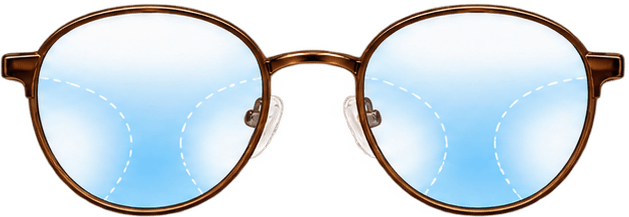
Progressive lenses contain different viewing zones for distance, intermediate and near vision.
- Frame should sit consistently
- Bridge fit should be stable
- Vertical position matters
- Frame should not continually slide
- Excessive tilt can change the viewing position
Why Can New Glasses Feel Uncomfortable?
Even when the prescription is correct, a new frame may need small fitting changes after you begin wearing it.
- Frame slides down
- Temples feel too tight
- Nose pads create pressure
- Frame sits slightly crooked
- Glasses touch eyelashes
- Frame does not stay in a consistent position
A fit issue does not automatically mean the prescription or lenses are wrong.
Should You Adjust Glasses at Home?
Very minor screw tightening may be straightforward, but significant frame bending should be approached carefully.
Plastic and acetate frames can crack if forced, and some adjustments require controlled heat. Metal frames can fatigue or break if pressure is applied in the wrong location.
Rimless and semi-rimless frames also require care because the lenses or mounting points may form part of the frame structure.
What Happens During an Eyeglass Adjustment?
Good adjustment is usually a series of small changes, followed by checking the frame on the wearer again.
Inspect the Frame
Check alignment, screws, hinges, nose pads and overall frame condition.
Check the Fit
Look at bridge position, temple contact, frame height and where pressure occurs.
Make Small Adjustments
Modify the appropriate frame areas based on material, design and fit problem.
Recheck on Your Face
Confirm that the frame is stable, balanced and comfortable.
How Often Should Glasses Be Adjusted?
There is no fixed adjustment schedule. Have the fit checked when your glasses become loose, tight, crooked or uncomfortable.
Adjustment can also be useful after the frame has been dropped, bent, slept on, carried without protection or otherwise distorted.
Daily wear can gradually change frame alignment, especially over a long period of use.
What If the Frame Is Actually Damaged?
Adjustment corrects fit and alignment, but it does not repair every structural problem.
If a hinge is broken, a frame is cracked, a screw is missing or another part has failed, the glasses may need repair rather than a routine adjustment.
Explore Glasses RepairIf the Frame Fits Well but the Lenses Need Updating
A frame adjustment can restore comfort, but it cannot correct scratched lenses or an outdated prescription. If the frame is still suitable, you may be able to keep it and replace only the lenses.
Replace Lenses in Existing Frames
Keep suitable frames you already like and update the prescription, lens material or lens features.
Explore Lens Replacement →Single-Vision Lenses Online
Order prescription lenses for one primary viewing distance, including distance or near vision.
Shop Single Vision →Progressive Lenses Online
Order progressive prescription lenses for distance, intermediate and near vision without a visible bifocal line.
Shop Progressive →Bring Your Glasses In for a Fit Check
If your glasses slip, pinch, hurt behind your ears or sit crooked, you may only need a professional adjustment.
We can look at how the frame sits on your face and determine whether adjustment, repair or another solution makes sense.
☎ Call (415) 921-3222 📍 Get DirectionsSan Francisco, CA 94115
Adjustment, Repair and Lens Replacement
Eyeglass Frame Adjustment FAQ
Why do my glasses keep slipping down my nose?
Glasses may slip because the frame is loose, the temples need adjustment, the nose pads are positioned poorly or the frame does not fit the face correctly. A professional adjustment can often improve stability.
Why do my glasses pinch my nose?
Pressure on the nose may come from nose pads that are too close together, a narrow bridge, incorrect frame position or excess weight from the frame and lenses.
Why do my glasses hurt behind my ears?
Pain behind the ears can occur when the temple arms curve too sharply, press too tightly or are positioned incorrectly. A fitting adjustment may improve comfort.
Why do my glasses sit crooked?
Glasses can sit crooked because of frame misalignment, bent temples, bridge position, unequal temple angles or normal facial asymmetry.
Can crooked glasses affect how I see through progressive lenses?
Frame position can influence where your eyes look through the lens. This can be especially noticeable with progressive lenses and other designs that rely on accurate fitting measurements.
Can I adjust my glasses at home?
Minor tightening may be possible in some cases, but forcing significant frame adjustments at home can damage hinges, crack plastic or change alignment. Professional adjustment is safer for larger fit changes.
How often should glasses be professionally adjusted?
There is no fixed schedule. Have the fit checked whenever the glasses become loose, tight, crooked or uncomfortable, or after the frame has been bent or distorted.
Can I replace the lenses if my frame still fits well?
Often, yes. If the frame remains structurally sound and is compatible with your prescription and lens design, replacement lenses may be possible.
Can I order prescription lenses online from CV Optical?
Yes. CV Optical offers online ordering for Single Vision and Progressive prescription lenses, plus lens replacement for suitable existing frames.
Glasses Slipping, Pinching or Sitting Crooked?
You may not need new glasses. Start with a professional frame adjustment, and if the frame is good but the prescription lenses need updating, you can replace the lenses instead.