Lens Upgrades in San Francisco
Clear Vision Optical helps you compare prescription lens designs, materials and optional treatments based on your prescription, selected frame and everyday visual needs.

Progressive Lenses
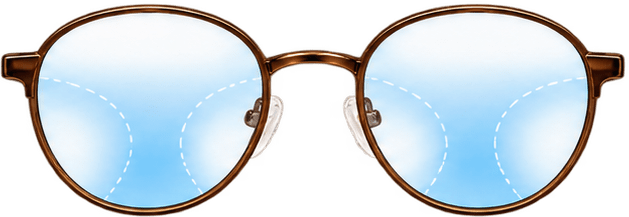
Line-free prescription correction for distance, intermediate and near viewing. Progressive lenses can provide a smooth transition between viewing ranges when properly measured and fitted.

High-Index and Thin Lenses
High-index materials may provide thinner and lighter lenses for stronger prescriptions. Final lens thickness depends on your prescription, selected frame and lens material.

Anti-Reflective and Crizal® Coatings
Anti-reflective coatings help reduce reflections on the lens surface and may improve lens appearance and visual comfort. Available options depend on your prescription and selected lenses.

Blue-Light Filtering
Blue-light filtering is an optional lens treatment designed to filter a portion of blue-violet light. We can explain the available choices based on your prescription and preferences.

Photochromic and Transitions® Lenses
Photochromic lenses are designed to darken outdoors and return toward clear indoors. Available colors, materials and performance characteristics vary by lens option.

Polarized Lenses
Polarized lenses are designed to reduce reflected outdoor glare, particularly from roads, water and other reflective surfaces. Prescription and non-prescription options may be available.

Discuss Your Lens Options
Find the Right Prescription Lens Upgrades Without Paying for Features You Do Not Need
Prescription lens upgrades should solve a specific visual need. Whether you want thinner glasses, fewer reflections, convenient light-adaptive lenses or prescription sunglasses, the right combination depends on your prescription, frame and daily activities.
Clear Vision Optical helps San Francisco customers compare lens materials, coatings and designs before ordering. You can also explore prescription lenses online or ask about upgrading the lenses in frames you already own.
Prescription Lens Upgrade Comparison Chart
Each upgrade addresses a different purpose. This comparison explains what the treatment is designed to do and when it may be worth considering. Not every feature is needed for every prescription.
| Lens Upgrade | Main Benefit | Who Might Consider It? | Important Detail |
|---|---|---|---|
| Anti-Reflective Coating | Reduces reflections from lens surfaces | People bothered by lens reflections | Different coatings have different cleaning and durability features |
| 1.60, 1.67 or 1.74 High Index | Can reduce lens thickness | People with stronger prescriptions | Final thickness also depends on frame size and prescription |
| Progressive Lens Design | Combines distance, intermediate and near correction | People requiring multiple viewing ranges | Requires appropriate frame fitting and measurements |
| Transitions® / Photochromic | Responds to changing light conditions | People moving frequently between indoors and outdoors | Darkening depends on the product, temperature and lighting conditions |
| Polarized Lenses | Reduces reflected outdoor glare | Drivers, outdoor enthusiasts and people around water | Can affect visibility of some digital screens |
| Blue-Light Filtering | Filters selected blue-violet wavelengths | People who prefer this optional lens feature | Not proven to prevent digital eye strain in most users |
| Scratch-Resistant Treatment | Improves resistance to everyday surface scratches | Most everyday glasses wearers | No prescription lens is completely scratch-proof |
High-index materials address thickness, anti-reflective coatings address reflections, and progressive lenses address multiple prescription viewing distances. Selecting the right feature matters more than selecting the largest number of upgrades.
Which Prescription Lens Upgrades Are Worth It?
Instead of choosing every available feature, start with the situations where your current glasses are not meeting your needs.
For Everyday Prescription Glasses
A suitable single-vision or progressive prescription with an anti-reflective treatment may meet many everyday needs.
Lens material should be selected based on prescription and frame compatibility.
Explore Single Vision Lenses →For Strong Prescription Glasses
High-index materials may reduce lens thickness, particularly when combined with a suitable frame size.
Higher index is not automatically better for every prescription or mounting style.
Explore High-Index Lenses →For Distance, Computer and Reading
Progressive lenses can combine distance, intermediate and near viewing in one pair.
Occupational designs may also be considered for specific work tasks.
Learn About Progressive Lenses →For Driving and Outdoor Glare
Polarized prescription sunglasses may reduce strong reflected glare from roads, water and other surfaces.
Tint and lens design should be selected for your intended use.
Explore Prescription Sunglasses →For Changing Light Conditions
Photochromic lenses, including available Transitions® products, adapt their tint to certain lighting conditions.
Performance inside vehicles varies by product type.
Review Available Lens Options →For Long Hours at a Screen
Start with accurate prescription correction, suitable viewing distances and comfortable work setup.
Blue-light filtering is optional and should not be presented as a proven treatment for digital eye strain.
Request Lens Recommendations →Are Thinner High-Index Lenses Worth the Upgrade?
Higher-index prescription lens materials can reduce thickness compared with conventional plastic, particularly in stronger prescriptions. The actual difference depends on lens power, frame dimensions, lens design and optical centering.
When High Index May Help
- Higher minus or plus prescriptions
- Customers concerned about lens thickness
- Suitable frame sizes and shapes
- Prescriptions compatible with the chosen material
In some cases, choosing a smaller frame can improve lens appearance as much as—or more than— increasing the index.
Compare Lens Thickness →When Standard Materials May Be Enough
Mild prescriptions in appropriately sized frames may not require the thinnest available lens material.
Other factors, including optical properties, impact resistance, weight and cost, should also be considered.
Why Are My Glasses So Thick? →Standard vs Premium Anti-Reflective Coatings
Anti-reflective coatings are designed to reduce reflections on prescription lenses. Premium products may include additional cleaning, water-repellent or surface-durability features. Actual performance depends on the specific coating.
Standard Anti-Reflective Coating
A standard AR treatment helps reduce visible reflections from the front and back lens surfaces.
It may be a practical upgrade for many prescription glasses.
Premium Anti-Reflective Coating
Some premium AR treatments offer enhanced resistance to smudges, water and surface wear.
Compare actual coating specifications and warranty terms, rather than relying on the word “premium.”
Once an anti-reflective coating deteriorates, routine cleaning cannot restore the original finish. Depending on the lens condition, replacement may be the more dependable solution. Read our peeling coating guide .
Can I Add Lens Upgrades to My Current Frames?
Often, yes. Many suitable existing frames can receive replacement lenses made with a different design, material or coating. You may not need to purchase another pair of frames.
Keep the Frames You Love
Clear Vision Optical can discuss lens replacement options for existing eyeglass frames. The frame must be compatible with your prescription and the selected lens design.
- Replace scratched prescription lenses
- Explore thinner lens materials
- Choose available AR coatings
- Update single-vision or progressive lenses
- Compare prescription sunglass options
What Needs to Be Checked?
Frame material, condition, mounting construction and lens dimensions all affect compatibility.
Certain specialty frames may need additional assessment.
Can I Put Prescription Lenses in Any Glasses? →How Much Do Prescription Lens Upgrades Cost?
The price of a lens upgrade depends on the selected design, material, coating and prescription requirements. Premium progressive designs, high-index materials and specialty treatments may increase the cost.
What Can Increase the Price?
- Progressive lens design
- Higher-index materials
- Premium AR treatments
- Photochromic technology
- Polarized prescription lenses
- Special mounting requirements
Compare Before You Buy
There is no reason to purchase an upgrade unless its benefits are relevant to your prescription and intended use.
Compare the complete lens price, not just the cost of individual add-ons.
Lens Replacement Cost GuideHow to Order Prescription Lens Upgrades
Review Your Prescription
Identify whether you need single vision, progressive or another suitable lens design.
Choose Your Priorities
Consider thickness, reflections, outdoor glare, convenience and your budget.
Check Your Frames
Confirm the frame and fitting measurements support the selected lenses.
Review and Order
Compare available lens options, understand pricing and complete the ordering process.
Prescription Lens Upgrades in San Francisco
Clear Vision Optical serves customers seeking prescription lenses and lens upgrades in San Francisco, including Japantown, Lower Pacific Heights, Pacific Heights, the Richmond District, Nob Hill, the Sunset and surrounding neighborhoods.
Visit Clear Vision Optical
2186 Geary Blvd, Unit 102
San Francisco, CA 94115
Phone: (415) 921-3222
What to Bring or Share
- Your valid eyeglass prescription
- Your current glasses or selected frames
- Information about your visual needs
- Questions about materials or coatings
- Your preferred budget range
Some fitting and frame compatibility decisions require an in-person or physical frame review.
Related Prescription Lens Guides and Services
Progressive Lenses
Learn how progressive designs provide multiple viewing distances without a visible bifocal line.
Progressive Lenses San Francisco →High-Index Lenses
Compare materials designed to reduce lens thickness in suitable prescriptions.
High-Index Lens Guide →Lens Replacement
Keep compatible existing frames and explore replacement prescription lenses.
Lens Replacement San Francisco →Prescription Eyeglasses
Learn about prescription glasses, lens choices and frame options in San Francisco.
Prescription Eyeglasses →Glasses Repair
Learn about common frame problems and optical repair services.
Glasses Repair San Francisco →Lens Replacement by Mail
Explore the process for ordering new lenses for existing frames by mail.
Mail-In Lens Replacement →Prescription Lens Upgrades FAQ
What are the best prescription lens upgrades?
Are premium lenses worth the extra cost?
Is anti-reflective coating worth it?
Are 1.67 or 1.74 high-index lenses worth it?
Do blue-light glasses help with computer eye strain?
Should I choose polarized or photochromic lenses?
Can I upgrade lenses in my existing frames?
Do progressive lenses require special measurements?
How much do prescription lens upgrades cost?
Can I use my prescription from another eye doctor?
Can I order upgraded prescription lenses online?
Where can I get lens upgrades in San Francisco?
Upgrade Your Lenses. Keep Your Options Clear.
Compare prescription lens designs, coatings and materials before placing your order. Choose only the features that make sense for your prescription, frames and daily routine.